Interior Tech in New EVs: Screens, Seats and Software
The cabin is the part of an electric car that dates fastest, and the fix is not a bigger screen — it is software that arrives after you buy the car. The Xmart OS cockpit is published as OTA-upgradable, with updates delivered over Wi-Fi or the mobile network, and it includes customisable in-car scene modes. On a car with up to 525 km of WLTP range, that upgradability is what keeps the interior feeling current in year three.
Key takeaways
- The Xmart OS cockpit is OTA-upgradable, with updates delivered over Wi-Fi or the mobile network rather than at a dealership.
- Power-reclining Nappa leather seats are listed for the range, and the manufacturer notes that availability varies by configuration.
- XPILOT ASSIST is published as an assistance function: the driver must stay aware, monitor traffic and take over when needed.
- The perception system uses a front binocular camera plus a rearview camera, extending visual range by 125% over the previous generation and recognising 49 obstacle types.
What the cockpit actually does
Xmart OS is the cabin system, and two capabilities define it in practice. The first is that the interface is OTA-upgradable, which means features change without a workshop visit: updates arrive over Wi-Fi or the mobile network. The second is customisable in-car scene modes, which let you shape how the car behaves for different kinds of trips instead of accepting one factory setup.
For a buyer, the interesting question is not how many screens there are but what happens to those screens in three years. A cabin that receives updates still looks and behaves like a newer car; a cabin that does not will feel its age the moment a passenger connects their phone. That is why the update mechanism belongs on the test drive checklist, alongside the seat adjustment.
Software that ages better than hardware
Over-the-air updates change the ownership experience in a quiet way: nothing to book, nothing to drop off, and no reason to skip an improvement because it is inconvenient. The car pulls the update when it can, over a home network or a mobile connection, and the interface you learn in month one is not necessarily the interface you have in year three.
There is a habit worth building here. Check the software version at every service and once before a long trip, and keep updates for when the car is parked at home rather than on the road. The app download page is where the owner app side of that routine starts, since scheduling maintenance and services happens there rather than over the phone.
Seats, space and the footnote that matters
Comfort hardware is where specification sheets flatter themselves. The range is listed with power-reclining Nappa leather seats, and the manufacturer attaches a footnote to the effect that feature availability varies by configuration. That sentence is the one to carry into the dealership, because it means the demonstrator's seats are not automatically the seats in your quote.
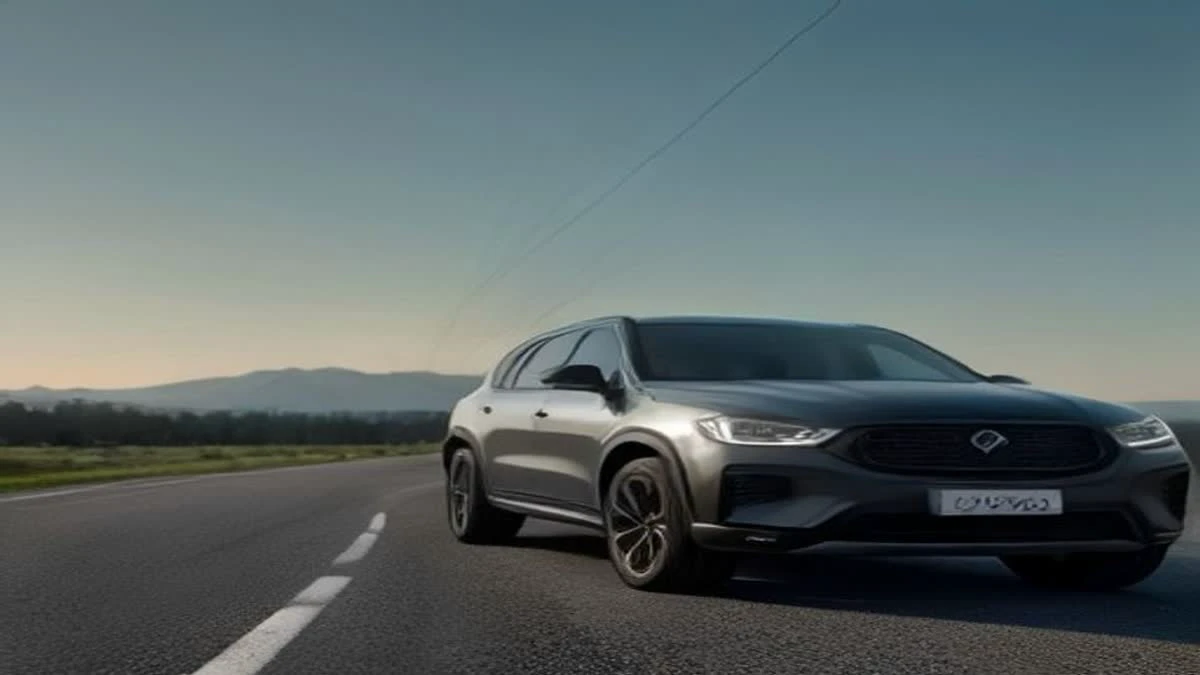
The New G6's cabin is shaped by its fastback silhouette and long front overhang, which affect how the seating position feels and where the windscreen pillars sit in your line of sight. Sit in the car for twenty minutes rather than two, adjust everything twice, and then ask for the configuration sheet in writing so you know exactly which trim level delivers which seat function.
Assistance systems are cabin features too
Driver assistance is experienced from the driver's seat, so it belongs in a conversation about interior technology. XPILOT ASSIST is published as an assistance function, and the manufacturer's footnote is explicit: the driver must remain aware, monitor traffic and take over when needed, and the system does not remove the driver's responsibility.
Underneath it sits the XPENG Full-Stack Lofic Architecture, which pairs a front binocular camera with a rearview camera and is described as extending visual perception range by 125% compared with the previous generation while recognising 49 types of obstacles, both dynamic and static. Read those numbers as claims about perception hardware and software rather than as promises about what the car will do on your street, and read the safety framing the way the manufacturer does — the range is backed by Euro NCAP five-star safety.
Cabin tech and the conditions attached to it
| Feature | Published detail and condition |
|---|---|
| Xmart OS cockpit | OTA-upgradable interface, updates over Wi-Fi or mobile network |
| Scene modes | Customisable in-car modes |
| Seats | Power-reclining Nappa leather; availability varies by configuration |
| Driver assistance | XPILOT ASSIST, an assistance function with driver responsibility retained |
| Perception hardware | Front binocular plus rearview camera; 125% visual range extension; 49 obstacle types |
| Remote diagnostics | Provided as standard across the range |
Remote diagnostics: support that arrives without a visit
Remote diagnostics is provided as standard, and specialists can assess the root cause and the data behind a fault without you driving anywhere. Depending on the issue, the fault can sometimes be resolved remotely, which is the difference between a message and a morning lost to a workshop queue. Spare parts and accessories come through the same dealer network, and the Owner's App is where maintenance and other services are scheduled.
Worked example: what the software does not change
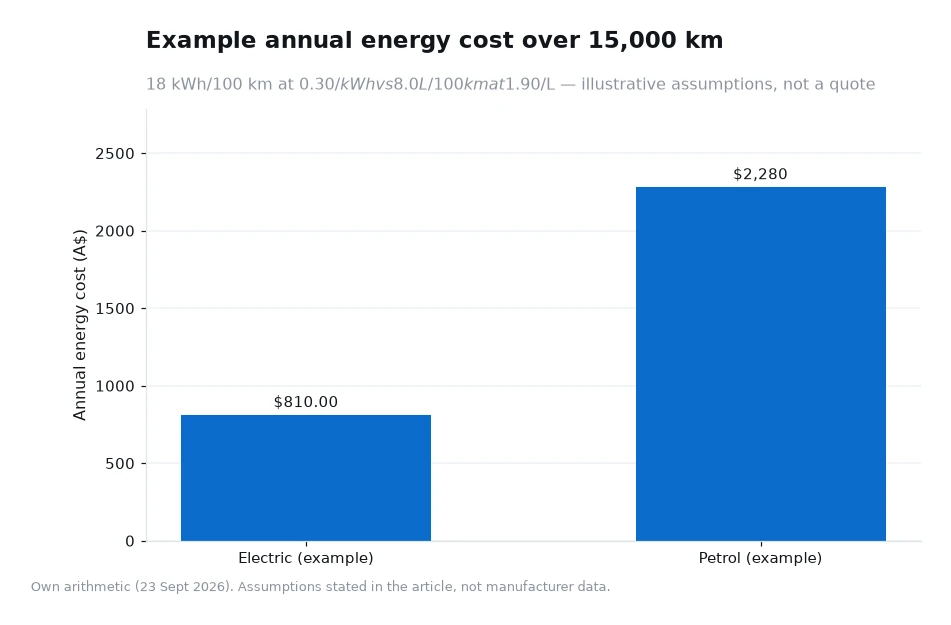
Screens and updates do not move the energy bill, and it is worth putting numbers on the part of ownership that stays the same. Assumptions, all labelled: 15,000 km a year, 18 kWh per 100 km, electricity at $0.30 per kWh, and a petrol comparison at 8.0 L per 100 km with fuel at $1.90 per litre.
Electric case: 15,000 ÷ 100 = 150 blocks of 100 km. 150 × 18 kWh = 2,700 kWh. 2,700 × $0.30 = $810 a year. Petrol case on the same distance: 150 × 8.0 L = 1,200 L, and 1,200 × $1.90 = $2,280. The difference is $2,280 − $810 = $1,470 a year, which is about $122 a month, and it does not depend on which screen size you chose.
Now the software side, with its own assumptions: assume an over-the-air update averages 2.5 GB and that four arrive in a year, which is 2.5 × 4 = 10 GB of data. Downloaded over a home network, that is a rounding error on a household plan; downloaded over a mobile connection, it is worth checking your plan before a long trip. Neither figure changes the $810 above, which is the point — cabin technology is a comfort purchase, not an efficiency one.
Frequently asked questions
Do over-the-air updates really change the cabin experience?
They can, because the Xmart OS cockpit interface is published as OTA-upgradable and updates arrive over Wi-Fi or the mobile network, so features and settings can change without a dealership visit.
Are the Nappa leather seats included on every variant?
Not necessarily. Power-reclining Nappa leather seats are listed for the range with the manufacturer's note that availability varies by configuration, so confirm the seat specification on your written quote.
How to judge a cabin in one visit
Spend the first ten minutes not touching anything: sit, look out, and notice where your eyes land and whether the pillars intrude. Then spend ten minutes adjusting everything twice, because a seat that feels fine once can be a seat you cannot repeat. Finally, ask to see the software version and the update screen, and ask which assistance functions are fitted to the variant you are quoting.
Take the same list to a second car if you are comparing options, and write the answers down while you are still sitting in it. The X9 and the New G6 differ enough in cabin proportions that the twenty-minute test is genuinely useful rather than a formality for electric suv cars australia buyers comparing the two.
Cabin, assistance and warranty details come from the manufacturer's Australian site at xpeng.com/au, read 23 Sept 2026, including the footnotes that Nappa seat availability varies by configuration, that XPILOT ASSIST is an assistance function requiring the driver to stay aware and take over when needed, and that WLTP range depends on conditions. The 15,000 km, 18 kWh per 100 km, $0.30 per kWh, 8.0 L per 100 km, $1.90 per litre and 2.5 GB update assumptions are illustrative, not manufacturer data.[1]