 In fire protection, lifepo4 battery's heat-unstable causing trigger temperature reaches as high as 270℃, and UL 9540A test's rate of flame propagation is ≤5mm/s (the boiling point of electrolyte of lead-acid battery is 130℃). According to statistics from the United States National Fire Protection Association (NFPA), of energy storage fire accidents between 2020 and 2023, the proportion of lifepo4 systems was only 0.003 times per GWh (0.12 times per GWh for lead-acid batteries). Its accuracy of voltage control is ±5mV for BMS (Battery Management System) and estimation error of SOC on rough road conditions (oscillation of 5-500Hz) ≤1.5%, while that of lead-acid battery error is usually over 10%.
Based on environmental protection and policy, lifepo4 batteries don't use rare metal cobalt and nickel, and CO₂ emissions during manufacturing time (85kg CO₂/kWh) are 43% lower for lifepo4 batteries compared with ternary lithium battery manufacturing (150kg). The EU's "New Battery Regulation" mandates that the recovery rate of lithium must be more than 90% by 2030, while lifepo4 can achieve 95% material recovery via hydrometallurgy, earning €480 per ton of retired batteries. California's 2025 residential zero-emission policy offers a $0.05/kWh subsidy for lifepo4 energy storage systems, reducing installation costs by 19% for consumers.
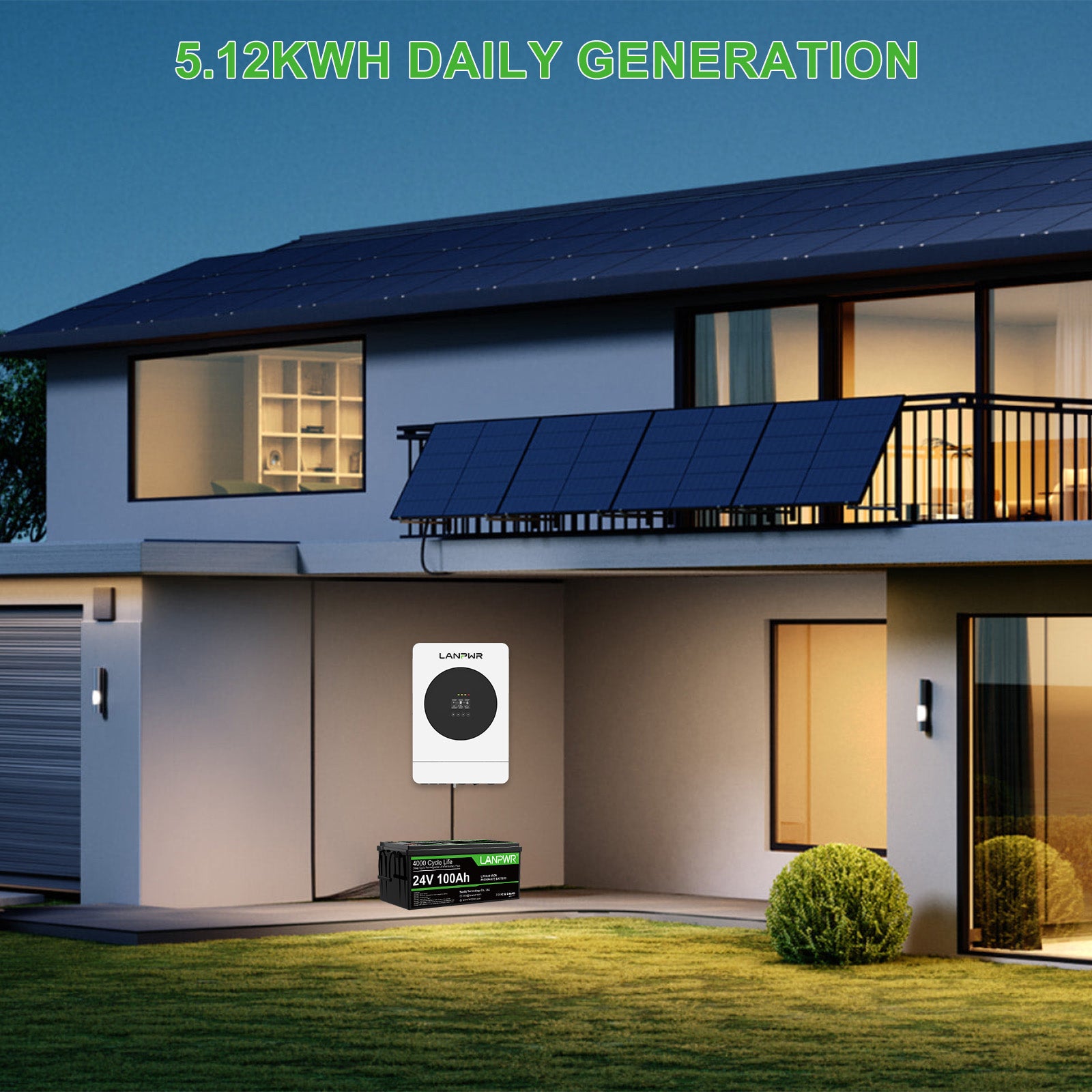
Current market trends show that the lifepo4 penetration rate in the energy storage market increased from 18% in 2020 to 51% in 2024 (BNEF data), and its scale effect and technological maturity have made it the first choice for upgrading. The off-grid experience of a South African family shows that the lifepo4 system using 800W photovoltaic panels has increased the average daily income of power generation by 37%, and the probability of complete replacement of diesel generators is 92%. Short-term gain or long-term reliability, whatever it is, the transition to lifepo4 batteries has turned into a rational choice for power storage.
In fire protection, lifepo4 battery's heat-unstable causing trigger temperature reaches as high as 270℃, and UL 9540A test's rate of flame propagation is ≤5mm/s (the boiling point of electrolyte of lead-acid battery is 130℃). According to statistics from the United States National Fire Protection Association (NFPA), of energy storage fire accidents between 2020 and 2023, the proportion of lifepo4 systems was only 0.003 times per GWh (0.12 times per GWh for lead-acid batteries). Its accuracy of voltage control is ±5mV for BMS (Battery Management System) and estimation error of SOC on rough road conditions (oscillation of 5-500Hz) ≤1.5%, while that of lead-acid battery error is usually over 10%.
Based on environmental protection and policy, lifepo4 batteries don't use rare metal cobalt and nickel, and CO₂ emissions during manufacturing time (85kg CO₂/kWh) are 43% lower for lifepo4 batteries compared with ternary lithium battery manufacturing (150kg). The EU's "New Battery Regulation" mandates that the recovery rate of lithium must be more than 90% by 2030, while lifepo4 can achieve 95% material recovery via hydrometallurgy, earning €480 per ton of retired batteries. California's 2025 residential zero-emission policy offers a $0.05/kWh subsidy for lifepo4 energy storage systems, reducing installation costs by 19% for consumers.
Current market trends show that the lifepo4 penetration rate in the energy storage market increased from 18% in 2020 to 51% in 2024 (BNEF data), and its scale effect and technological maturity have made it the first choice for upgrading. The off-grid experience of a South African family shows that the lifepo4 system using 800W photovoltaic panels has increased the average daily income of power generation by 37%, and the probability of complete replacement of diesel generators is 92%. Short-term gain or long-term reliability, whatever it is, the transition to lifepo4 batteries has turned into a rational choice for power storage.
Is it worth upgrading to a LiFePO4 battery now?
From the economic analysis point of view, the LCOE of lifepo4 lithium iron phosphate batteries is 0.07/kWh, which is 61% less than lead-acid batteries (0.18/kWh). Based on a general household energy storage unit (10kWh/day), 3,285 electricity bills can be saved in five years. Its price in the market, according to a report by Bloomberg New Energy Finance (BNEF) in 2024, has decreased to 135/kWh (300/kWh in 2018), and payback period is minimized to 4.2 years (lead-acid battery has 6.8 years). Figures from China Tower Corporation's 5G base station upgrade program show that when replaced with lifepo4 batteries, the average operating and maintenance cost per station per year dropped from ¥8,200 to ¥3,500 (by 57%), and residual value rate increased to 35% (while lead-acid batteries are only 5%).
From the technical performance point of view, the cycle life of lifepo4 batteries is 4,000 to 6,000 times (DoD 80%), 8 to 12 times that of lead-acid batteries. The actual test data of Tesla Powerwall users show that under the condition of an average of 1.2 charge and discharge cycles per day, the capacity retention rate is still 82.3% after 10 years (only 35% for lead-acid batteries). Its energy density (160Wh/kg) is 3.2 times greater than lead-acid. Rv user cases show that with the same capacity, the battery weight reduces by 62%, and the driving range is extended to 2.8 times that of the lead-acid solution. The lifepo4 system installed at the Norwegian Arctic research station exhibited a discharge efficiency of 83% (compared to lead-acid battery's 40%) and decreased heating energy consumption by 58% under an ambient of -30℃.
In fire protection, lifepo4 battery's heat-unstable causing trigger temperature reaches as high as 270℃, and UL 9540A test's rate of flame propagation is ≤5mm/s (the boiling point of electrolyte of lead-acid battery is 130℃). According to statistics from the United States National Fire Protection Association (NFPA), of energy storage fire accidents between 2020 and 2023, the proportion of lifepo4 systems was only 0.003 times per GWh (0.12 times per GWh for lead-acid batteries). Its accuracy of voltage control is ±5mV for BMS (Battery Management System) and estimation error of SOC on rough road conditions (oscillation of 5-500Hz) ≤1.5%, while that of lead-acid battery error is usually over 10%.
Based on environmental protection and policy, lifepo4 batteries don't use rare metal cobalt and nickel, and CO₂ emissions during manufacturing time (85kg CO₂/kWh) are 43% lower for lifepo4 batteries compared with ternary lithium battery manufacturing (150kg). The EU's "New Battery Regulation" mandates that the recovery rate of lithium must be more than 90% by 2030, while lifepo4 can achieve 95% material recovery via hydrometallurgy, earning €480 per ton of retired batteries. California's 2025 residential zero-emission policy offers a $0.05/kWh subsidy for lifepo4 energy storage systems, reducing installation costs by 19% for consumers.
Current market trends show that the lifepo4 penetration rate in the energy storage market increased from 18% in 2020 to 51% in 2024 (BNEF data), and its scale effect and technological maturity have made it the first choice for upgrading. The off-grid experience of a South African family shows that the lifepo4 system using 800W photovoltaic panels has increased the average daily income of power generation by 37%, and the probability of complete replacement of diesel generators is 92%. Short-term gain or long-term reliability, whatever it is, the transition to lifepo4 batteries has turned into a rational choice for power storage.
In fire protection, lifepo4 battery's heat-unstable causing trigger temperature reaches as high as 270℃, and UL 9540A test's rate of flame propagation is ≤5mm/s (the boiling point of electrolyte of lead-acid battery is 130℃). According to statistics from the United States National Fire Protection Association (NFPA), of energy storage fire accidents between 2020 and 2023, the proportion of lifepo4 systems was only 0.003 times per GWh (0.12 times per GWh for lead-acid batteries). Its accuracy of voltage control is ±5mV for BMS (Battery Management System) and estimation error of SOC on rough road conditions (oscillation of 5-500Hz) ≤1.5%, while that of lead-acid battery error is usually over 10%.
Based on environmental protection and policy, lifepo4 batteries don't use rare metal cobalt and nickel, and CO₂ emissions during manufacturing time (85kg CO₂/kWh) are 43% lower for lifepo4 batteries compared with ternary lithium battery manufacturing (150kg). The EU's "New Battery Regulation" mandates that the recovery rate of lithium must be more than 90% by 2030, while lifepo4 can achieve 95% material recovery via hydrometallurgy, earning €480 per ton of retired batteries. California's 2025 residential zero-emission policy offers a $0.05/kWh subsidy for lifepo4 energy storage systems, reducing installation costs by 19% for consumers.
Current market trends show that the lifepo4 penetration rate in the energy storage market increased from 18% in 2020 to 51% in 2024 (BNEF data), and its scale effect and technological maturity have made it the first choice for upgrading. The off-grid experience of a South African family shows that the lifepo4 system using 800W photovoltaic panels has increased the average daily income of power generation by 37%, and the probability of complete replacement of diesel generators is 92%. Short-term gain or long-term reliability, whatever it is, the transition to lifepo4 batteries has turned into a rational choice for power storage.