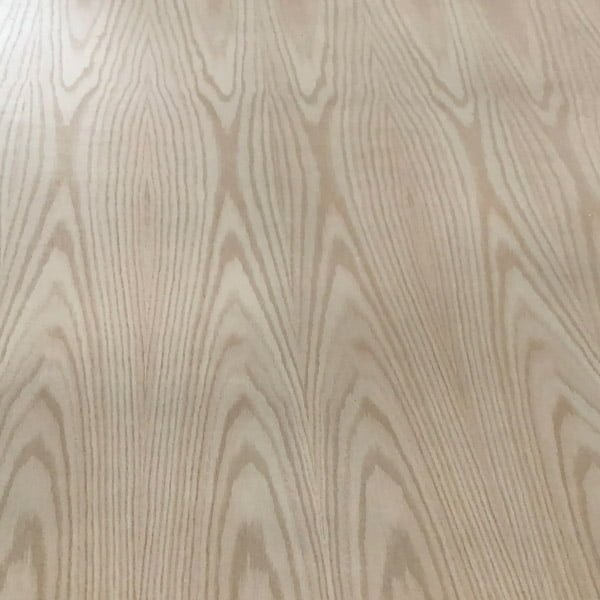
Yes. Medium Density Fibreboard can be covered with melamine, most commonly as a thermally fused laminate surface bonded to MDF under industrial heat and pressure. The 2025 CPA TFL standard specifically covers decorative thermally fused laminate applied to MDF, particleboard, and hardwood plywood for interior use. MDF gives the panel a smooth, uniform substrate, while melamine provides a finished surface with better stain, scratch, and cleaning resistance than unfinished MDF. Melamine does not make MDF waterproof. Cut edges, drilled holes, joints, and damaged areas can still absorb moisture, so edge banding, substrate grade, machining quality, and the intended environment remain important.
Melamine-faced MDF starts with two different materials doing separate jobs. MDF is made from refined cellulosic fibers combined with resin and pressed into a dense panel, while the decorative surface normally uses printed or solid-color paper impregnated with melamine resin. Under an industrial press, the resin cures against the MDF surface and becomes part of the finished panel rather than behaving like a loose film or paint coating.
The terminology matters because “melamine MDF” is often used loosely in furniture purchasing. The Composite Panel Association’s 2025 TFL standard defines thermally fused laminate panels as products in which TFL is fused to one or both faces of MDF, particleboard, or hardwood plywood for interior applications. It does not cover flooring, which has different wear and structural requirements.
MDF works well under decorative paper because its fiber structure is more uniform than a board made from larger wood particles. A flat, well-sanded face gives the impregnated paper consistent contact during pressing, reducing visible telegraphing and helping manufacturers produce repeatable matt, woodgrain, smooth, embossed, or textured surfaces.
Panel thickness still changes how the finished component behaves. Furniture factories commonly work with MDF in thicknesses such as 12 mm, 15 mm, 18 mm, 22 mm, and 25 mm, although commercial ranges extend beyond them. An 18 mm cabinet side, a 25 mm shelf, and a thin drawer component can use the same decorative paper while requiring different machining settings and structural checks.
Industrial lamination is not the same as covering an MDF sheet with a self-adhesive film. Decorative paper is impregnated with thermosetting resin, dried to a controlled state, placed over the substrate, and pressed using controlled temperature, pressure, and dwell time. Press settings vary with the resin system, paper weight, press type, board thickness, and required surface texture.
That manufacturing route explains why a factory-made TFL panel normally arrives ready for cutting and assembly. There is no separate cycle of primer, paint application, intermediate sanding, and topcoat curing on the flat faces, so large batches can maintain much tighter visual consistency than hand-finished painted panels.
The finished face improves everyday surface performance, but buyers should separate surface durability from substrate durability. A melamine layer can resist routine household staining and abrasion better than unfinished MDF, yet an exposed MDF edge still contains absorbent wood fibers. A small plumbing leak can therefore damage an edge even when the large front face remains visually unchanged.
Moisture exposure should be considered before selecting the MDF grade. Standard interior MDF is intended for dry interior applications; moisture-resistant grades are manufactured for more humid service conditions but are not equivalent to exterior panels or materials designed for continuous water exposure. The distinction is especially relevant around vanity units, utility furniture, kitchens, and commercial wash areas.
Edge treatment follows directly from that moisture issue. Once an 18 mm melamine MDF sheet is cut, the freshly exposed edge has no decorative resin layer protecting it. PVC, ABS, melamine edging, or another suitable edge material is therefore applied to visible or exposed sides, with adhesive coverage and edge-machine setup affecting the finished result.
A poorly bonded edge can open at corners or around frequently handled areas. Even a gap of less than 1 mm can expose the MDF underneath to cleaning water and humidity, so purchasing specifications should cover edge material and thickness rather than stating only “melamine MDF.”
Furniture machining adds another consideration: brittle decorative faces can chip when tools are blunt or cutting conditions are poorly controlled. Panel saws often use a scoring blade below the main blade so the lower decorative surface is cut cleanly before the primary saw tooth passes through the panel.
CNC routing and drilling also work well with MDF because its internal fiber structure is relatively consistent. Clean tooling, suitable spindle speed, stable workholding, and controlled feed rates help prevent chipped decorative edges. The 2022 ANSI A208.2 standard covers physical properties, dimensional tolerances, mechanical properties, and formaldehyde requirements for MDF used in interior applications.
| Specification point | What should be checked |
|---|---|
| Panel thickness | Confirm finished thickness and tolerance, not nominal size alone |
| Surface | Matt, gloss, woodgrain, embossed, solid color, or synchronized texture |
| Face construction | One-sided or two-sided melamine/TFL |
| MDF grade | Standard interior or moisture-resistant grade where appropriate |
| Edge treatment | Material, thickness, adhesive quality, and color match |
| Machining | Saw quality, drilling accuracy, CNC routing, and edge-chip limits |
| Compliance | Market-specific formaldehyde, certification, and documentation requirements |
The surface should also be matched with the job rather than selected only from a sample book. A dark matt cabinet door, for example, can show fingerprints differently from a textured woodgrain surface, while high-gloss panels may reveal minor surface irregularities more clearly under strong directional lighting.
Shelf design needs separate attention because melamine does not increase MDF bending stiffness enough to ignore span and loading. A 600 mm-wide shelf carrying lightweight clothing has a different requirement from a 1,000 mm shelf carrying books or equipment. Thickness, unsupported span, load position, fixing method, and reinforcement all affect long-term deflection.
The same distinction helps explain why MDF and Chipboard Particle Board should not be treated as interchangeable simply because both can receive melamine surfaces. MDF uses refined fibers and provides a fine, homogeneous machining surface; particleboard uses discrete particles and is widely used for economical cabinet carcasses, wardrobes, shelves, and ready-to-assemble furniture.
Their environmental and emissions documentation also needs to match the destination market. In the United States, EPA TSCA Title VI sets a formaldehyde emission limit of 0.11 ppm for MDF, 0.13 ppm for thin MDF, and 0.09 ppm for particleboard. After March 22, 2019, regulated composite wood products sold or imported in the United States have been required to carry TSCA Title VI compliance labeling.
EPA rules also require covered composite panels to be tested and certified through recognized third-party certification arrangements, subject to specified exemptions. Panel labels or associated bundle identification include information such as the producer, lot information, certifier identification, and a TSCA Title VI compliance statement, so commercial buyers can request documentation instead of relying only on a verbal emissions claim.
Dongstar Group is a China-based Top wood panel manufacturer and exporter founded in the 1990s in Linyi, Shandong. Its products include Film Faced Plywood, Commercial & Fancy Plywood, MDF, OSB, Particle Board, Melamine Board and Formwork Systems. Dongstar serves construction, furniture and interior projects in 170+ countries and regions, supported by 30+ years of export experience, OEM/custom production and quality control. Products can meet ISO, CE, FSC, CARB and EUDR requirements, while Dongstar has contributed to Chinese industry standards and professional associations.
For a commercial order, “18 mm white melamine MDF” is usually too little information for repeat production. A useful purchase specification states nominal dimensions, thickness tolerance, MDF grade, surface design, texture, face configuration, edge treatment, quantity, packing requirement, machining requirement, destination-market compliance, and acceptable appearance limits.
Color control also deserves attention when several production batches will be installed in one room. Decorative papers carrying the same design reference can show small differences between manufacturing lots, especially when viewed across large wall panels or adjacent cabinet doors. Keeping visible components within one approved batch reduces the chance of noticeable shade variation.
Surface samples should therefore be assessed at realistic viewing distances rather than only under desk lighting. A 100 × 100 mm sample may be enough to compare color, but a full cabinet door shows gloss, grain direction, repetition, texture depth, and light reflection much more clearly. Large projects often benefit from approving a production-size reference panel before full manufacturing begins.
Melamine MDF also behaves differently from painted MDF when a design includes routed profiles. Flat melamine panels are efficient for carcasses, shelves, desks, wardrobe sides, cabinet doors, and wall panels, but deeply routed decorative faces expose the MDF below the laminated surface. Painted MDF is often better suited to shaped profiles because primer and paint can cover the newly machined geometry.
Cleaning requirements are comparatively simple on intact melamine faces. A soft cloth with mild household cleaner is normally more appropriate than abrasive pads or aggressive solvents, since excessive abrasion can change surface sheen even when the MDF underneath is unaffected. Standing water should be removed instead of being left around joints and edges.
For commercial furniture made in 2026, specification work should therefore cover the complete panel construction rather than the decorative face alone: substrate grade, thickness, TFL surface, edge system, machining, hardware positions, emissions documentation, batch consistency, packaging, and service environment. A well-made melamine MDF panel can perform for years in wardrobes, offices, retail fixtures, kitchens, hotel furniture, storage systems, and other dry interior applications when those details are specified before production.